Loading...
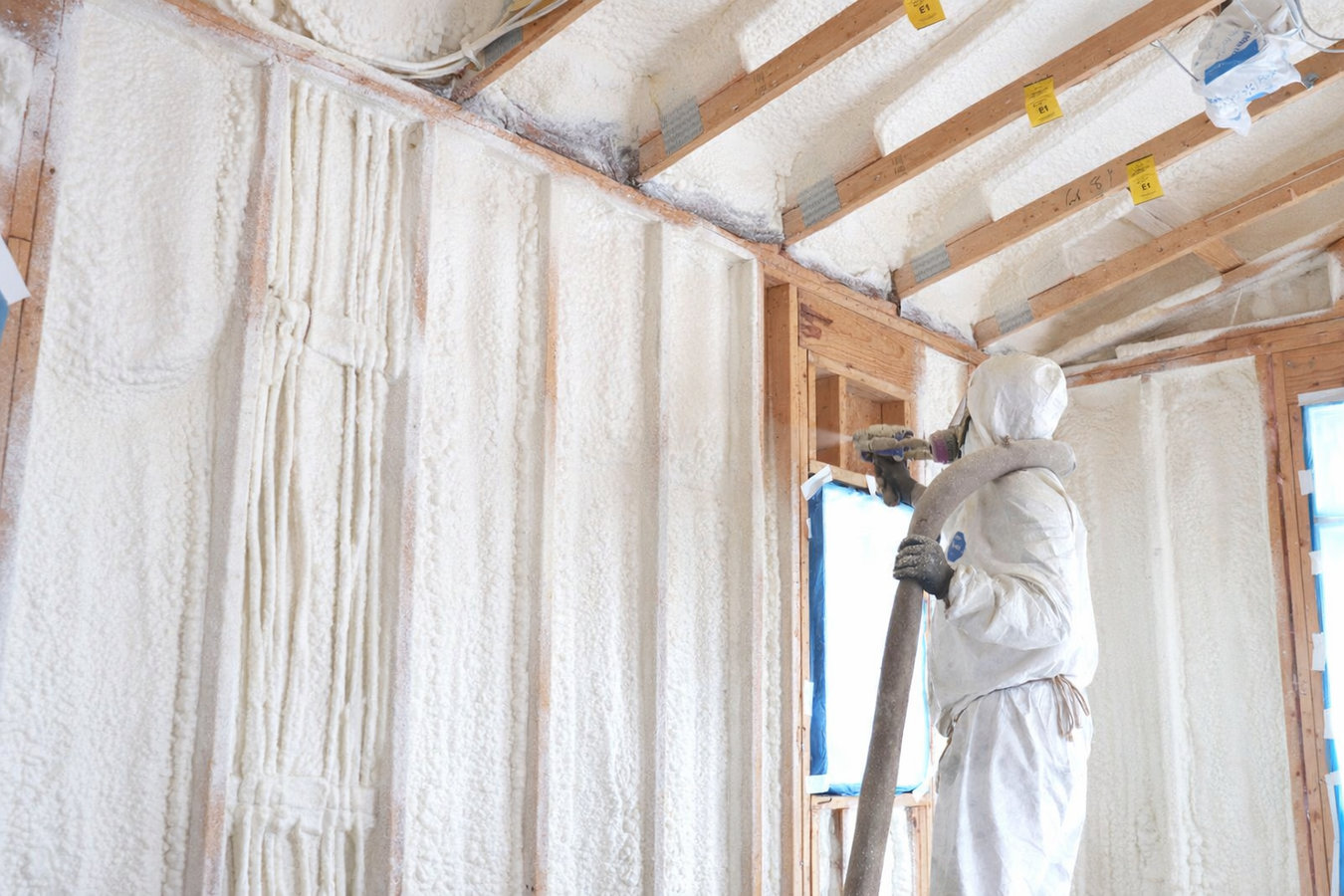
Closed-cell foam insulates and air-seals in a single pass - stopping heat loss and drafts that fiberglass alone cannot fix in Elmira's cold winters.
Closed-cell foam insulation in Elmira, NY is sprayed as a liquid that expands into a dense, rigid foam, sealing air leaks and insulating simultaneously, most residential jobs take one to two days.
Most insulation materials slow heat from moving through walls and ceilings - but they do not stop air from sneaking through gaps and cracks. Closed-cell foam does both jobs at once. It has one of the highest R-values per inch of any residential insulation, and it hardens in place, bonding directly to the surface it is applied to. That means no sagging, no settling, and no gaps at corners or edges. For Elmira homes with older construction where drafts are common, that combination is hard to match. Pairing closed-cell foam with spray foam insulation services in other areas of the home creates a more consistent thermal envelope throughout.
It also acts as a moisture barrier. Closed-cell foam resists water vapor moving through walls, which matters in a climate like Elmira's where cold winters and humid summers create ongoing pressure on your building envelope. That moisture resistance makes it a particularly strong choice for crawl spaces and basement rim joists in homes near the Chemung River valley.
If your gas or oil bill has been creeping up year over year but your habits have not changed, heat is likely escaping through gaps in the building envelope. In older Elmira homes, the most common culprits are the attic, the rim joist, and any crawl space that is not properly sealed. Pull out last winter's utility bills and compare them to two or three years ago.
If one bedroom, a back addition, or a room above a garage is noticeably colder than the rest of the house no matter what you set the thermostat to, the insulation in that area is either missing, thin, or failing. This is especially common in Elmira's older two-story homes where additions were built at different times.
Hold your hand near an electrical outlet on an exterior wall on a cold day. If you feel a draft, air is moving through gaps in the wall cavity. This kind of air infiltration is very common in pre-1960s construction in Elmira and is exactly the problem closed-cell foam is designed to fix.
Ice dams are caused by heat escaping through the attic, melting snow unevenly, and refreezing at the cold eaves. They are a reliable sign your attic insulation and air sealing are not doing their job. Elmira's heavy snowfall and freeze-thaw cycles make ice dams a recurring problem for homes with inadequate attic coverage.
Closed-cell foam is most valuable in areas where air leakage and heat loss happen together, and where moisture resistance matters. The rim joist - where your floor framing meets the top of the foundation wall - is one of the highest-impact applications in an older Elmira home. It is often where cold air infiltrates and heating dollars escape, and sealing it with closed-cell foam makes an immediate difference that homeowners feel in the first few weeks of the heating season. For crawl spaces in homes with any flooding or moisture history, closed-cell foam is a better choice than fiberglass batts because it will not absorb water, sag, or grow mold after a wet event. We also apply it in attic rooflines and cathedral ceilings where every inch of depth needs to count.
When the goal is a whole-home approach, we combine closed-cell foam in the critical air-sealing zones with open-cell foam insulation in interior wall cavities or attic floors where high density is less critical and cost efficiency matters. For homeowners comparing foam to traditional blown-in or batt options, the conversation often comes back to a simple question: do you want insulation alone, or do you want insulation and air sealing at the same time? Closed-cell foam gives you both. It is also worth noting that properly installed foam is considered a permanent solution - unlike some other materials, it does not settle or compress over time.
Best for any homeowner who wants to stop cold air infiltration at one of the most common weak spots in older construction - fast, high-impact, and no demolition required.
Ideal for homes near the Chemung River valley or in lower-lying areas where moisture is a real concern - closed-cell foam stays in place even after a wet event.
Suited for cathedral ceilings and unvented rooflines where tight spaces demand maximum R-value per inch and air sealing in one pass.
A strong fit for older stone or concrete block foundation walls that need both thermal performance and moisture resistance in a single material.
Elmira's winters are long and genuinely cold - average January temperatures drop into the single digits, and the heating season stretches from October through April. That sustained cold puts real pressure on any gaps or thin spots in your home's insulation. Closed-cell foam's ability to seal air leaks and insulate in one application is especially valuable here, because even small gaps in a wall or attic floor can drive up your heating bill over a five-month winter. A large share of Elmira's housing stock was built in the early to mid-1900s with little or no wall insulation, and closed-cell foam is one of the few products that can be retrofitted into existing structures - particularly in attics, crawl spaces, and rim joists - without tearing anything open. Homeowners in Waverly and Owego face the same older housing challenges and benefit from the same approach.
The Chemung River flooding history is another reason closed-cell foam is a frequent recommendation for homes in this area. Crawl spaces and basement rim joists in neighborhoods near the river or in lower-lying parts of the city have often been exposed to moisture repeatedly over the decades. Closed-cell foam resists water absorption, will not sag or grow mold after a wet event, and bonds tightly to whatever surface it is applied to. That durability is not just a marketing point - it is the practical reason local contractors reach for it when moisture is part of the picture. The Spray Polyurethane Foam Alliance sets the training and quality standards that qualified installers follow.
We respond within one business day. We ask a few basic questions about which area of the home you are concerned about, specific problems you have noticed, and roughly how old your home is - so we arrive prepared with the right equipment.
We walk the areas you want insulated, measure the space, and check for any moisture issues. This visit usually takes 30 to 60 minutes. You receive a written estimate that breaks down the area treated, the foam thickness, and the total cost - before you decide anything.
Before installation day, clear the work area - move stored items out of the attic or crawl space and ensure clear access. We tell you exactly what to move. Plan to be out of the treated area during spraying and for a few hours afterward while the foam cures.
The crew works methodically through the space, checking foam thickness as they go. Once cured, we confirm the re-entry window and walk you through what was installed. You receive documentation of the work - useful for NYSERDA rebate applications and future home inspections.
Free estimate. No pressure. We explain every option before any work begins.
(607) 302-4623Spray foam requires specialized mixing equipment and trained installers - it is not a job where general insulation experience is enough. Our crews have completed recognized industry training and know how to apply foam at consistent thickness, including in awkward corners and low-clearance spaces.
Elmira's pre-1940 housing stock has specific challenges: stone and block foundations, older framing, and years of accumulated air leakage. We work on these homes regularly and know where the problem spots are before we ever walk in the door.
We check for water intrusion before recommending closed-cell foam for any crawl space or basement application. Homes near the Chemung River valley often have moisture history that must be addressed first - installing over a damp surface is one of the most common mistakes in this market.
New York State offers rebates for qualifying insulation improvements, and we help you understand what your project may qualify for before you commit. NYSERDA programs can meaningfully reduce your out-of-pocket cost, and some utilities in the Southern Tier offer additional incentives.
Closed-cell foam is a significant investment, and the quality of the installation determines whether you get the performance you paid for. We take that seriously - every job gets the same level of care whether it is a single rim joist or a full attic.
A softer, lighter foam that fills interior wall cavities and attic floors where maximum R-value per inch is less critical and budget efficiency matters more.
Learn MoreThe broader category covering both open- and closed-cell applications - a good starting point if you are not sure which type fits your project.
Learn MoreWinter in the Southern Tier does not wait - lock in your installation date before the cold sets in and the schedule fills up.